
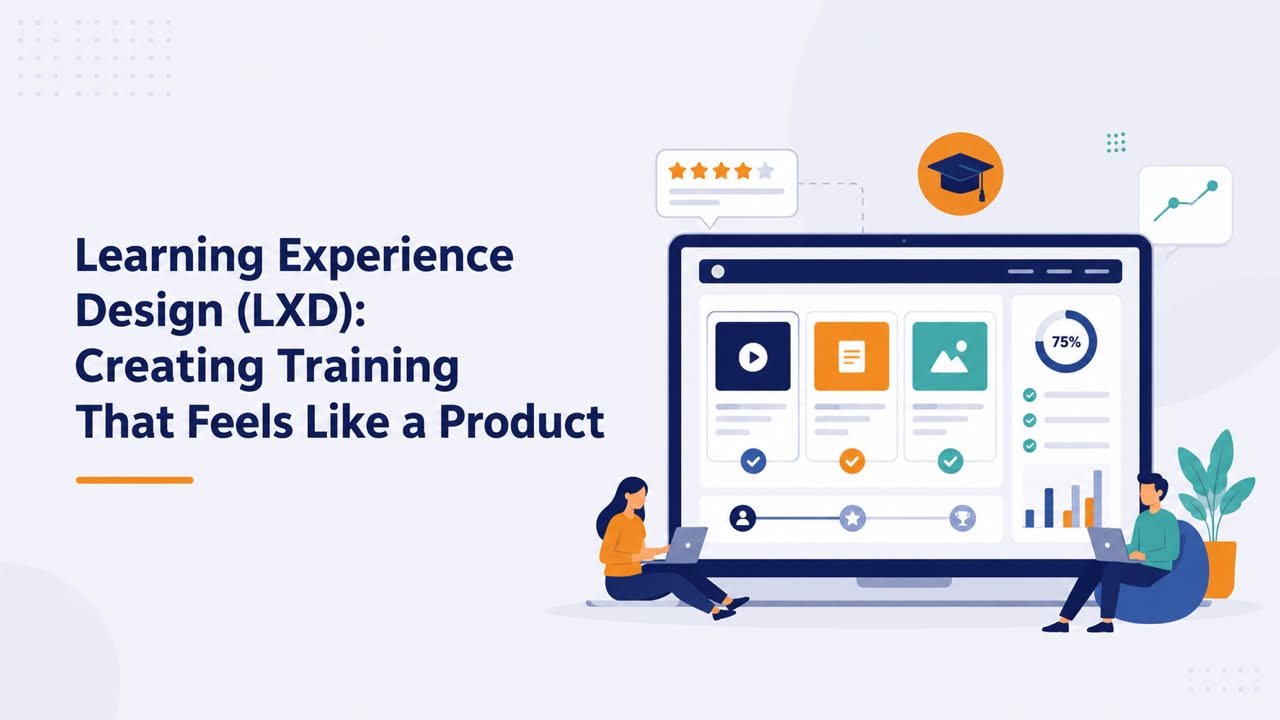
Learning Experience Design (LXD): Creating Training That Feels Like a Product
Corporate learning is going through a quiet but powerful shift. Traditional corporate training programs, long presentations, static modules, and one-size-fits-all delivery, are no longer enough. Today’s workforce expects learning to feel intuitive, engaging, and valuable. In other words, they expect it to feel like a product they would choose to use, not a system they are required to complete.
This is where Learning Experience Design (LXD) steps in. By blending principles from product design, user experience, and instructional design services, LXD transforms corporate training solutions into experiences that employees actively engage with.
What is Learning Experience Design (LXD)?
Learning Experience Design goes beyond content creation. It focuses on how employees interact with learning, how it feels, flows, and fits into their daily work. Unlike traditional employee training programs, LXD prioritizes usability, relevance, and personalization.
At its core, LXD treats learning like a product. That means:
- Understanding user needs through skill gap analysis and employee competency assessment
- Designing journeys instead of isolated modules
- Continuously improving based on feedback and data
When applied effectively, LXD strengthens enterprise learning and development by aligning training with real business outcomes.
Why Training Needs to Feel Like a Product
Think about the apps people use daily. They are simple, intuitive, and designed around user behavior. Now compare that to many corporate LMS solutions—often complex, passive, and disconnected from real work.
This gap explains why many corporate training programs struggle with engagement.
LXD addresses this by bringing in:
- User-centric design from digital products
- Personalization similar to streaming platforms
- Continuous iteration like modern software
Whether it’s online IT training courses, leadership training programs, or behavioral training programs, the goal is the same: make learning something employees want to return to.
Core Principles of LXD in Corporate Training
1. User-Centric Learning
LXD begins with understanding the learner. Through competency mapping and employee competency assessment, organizations can design customized corporate training that meets employees where they are.
For example, a beginner in data science training should not experience the same journey as someone pursuing data science certification training.
2. Learning in the Flow of Work
Modern employees don’t have time for long, disconnected sessions. LXD integrates learning into daily workflows using:
- blended learning programs
- virtual training solutions
- remote corporate training
This approach is especially valuable in global training programs and multi-location training programs, where flexibility is essential.
3. Personalization at Scale
Just as products adapt to user behavior, LXD enables tailored learning paths. Using corporate LMS solutions and advanced eLearning solutions, organizations can recommend:
- IT certification training based on role
- leadership development training for emerging managers
- agile training programs for transformation teams
This level of personalization enhances engagement and accelerates workforce development training.
4. Immersive and Hands-On Experiences
LXD emphasizes doing over consuming. Instead of passive slides, employees engage in:
- hands-on technical training
- immersive learning experiences
- real-world simulations
This is particularly impactful in technical training programs like DevOps certification training, IoT training programs, and financial modelling training, where practical application is critical.
5. Continuous Feedback and Iteration
Like any successful product, learning experiences must evolve. LXD incorporates feedback loops, analytics, and performance tracking to refine eLearning content development.
This ensures that corporate technical training programs remain relevant in fast-changing fields like emerging technology training and digital transformation training.
Applying LXD Across Training Domains
LXD is not limited to one type of training, it enhances every aspect of enterprise learning and development.
Technical and IT Training
From online IT training courses to IT training courses and DevOps certification training, LXD makes complex subjects easier to navigate through structured pathways and interactive content.
Leadership Development
Modern corporate leadership training benefits greatly from LXD. Programs such as:
- transformational leadership training
- leadership coaching programs
- women’s leadership development programs
become more impactful when designed as journeys with reflection, feedback, and real-world application.
Agile and Transformation Training
In areas like agile transformation training and change management training, LXD helps employees adopt new ways of working rather than just understanding concepts. Combined with agile consulting services and organizational transformation consulting, learning becomes a driver of change.
Certification and Professional Development
Programs like certified Six Sigma Green Belt training, certified Six Sigma Black Belt training, and professional certification training benefit from structured, product-like experiences that guide learners from basics to mastery.
The Role of Technology in LXD
Technology acts as an enabler of LXD. Modern corporate LMS solutions and eLearning solutions support:
- Personalized learning journeys
- Scalable delivery across worldwide corporate training
- Seamless cross-border training delivery
- Access to online training USA and beyond
With the rise of remote corporate training, organizations can deliver consistent, high-quality learning experiences regardless of geography.
Benefits of Learning Experience Design
Organizations adopting LXD see measurable improvements across their employee training programs:
- Higher engagement and completion rates
- Faster skill acquisition
- Better alignment with business goals
- Stronger impact from learning and development consulting initiatives
Most importantly, LXD transforms learning from an obligation into an opportunity.
Building an LXD-Driven Learning Strategy
To implement LXD effectively, organizations must rethink their approach to corporate training solutions:
- Start with data through skill gap analysis
- Design journeys using instructional design services
- Leverage technology like corporate LMS solutions
- Deliver through blended learning programs
- Continuously improve with feedback
Working with an international training provider can also help organizations scale LXD across regions through global training programs.
The Future of Corporate Learning
As businesses evolve, so must learning. LXD represents the future of enterprise learning and development, a future where training is not just consumed, but experienced.
From digital transformation training to leadership development training, the organizations that succeed will be the ones that treat learning like a product: designed with intent, built for users, and continuously improved.
Because when learning feels like a product, it stops being something employees have to do, and becomes something they genuinely want to engage with.
